A CRM for wholesale, built around the shops you visit
A simple CRM for wholesale: every shop you would like to sell to, hot, warm or cold, with a follow-up date, an owner and what it might be worth a week.
What you do today
The shops you mean to approach live in a notes app, a WhatsApp chat with yourself and the back of a receipt, and the one that said come back in March is forgotten by April.
One concrete detail
A prospect is an ordinary shop record from the moment it is created, so the notes, the contact and the products you guessed it would take carry straight over when it says yes. Nothing is re-typed between the pipeline and the round.
Most of the shops you will supply in a year are shops you have not walked into yet. The trouble is never finding them — it is remembering which ones you already spoke to, what they said, and when you promised to come back.
A pipeline of shops, not of deals
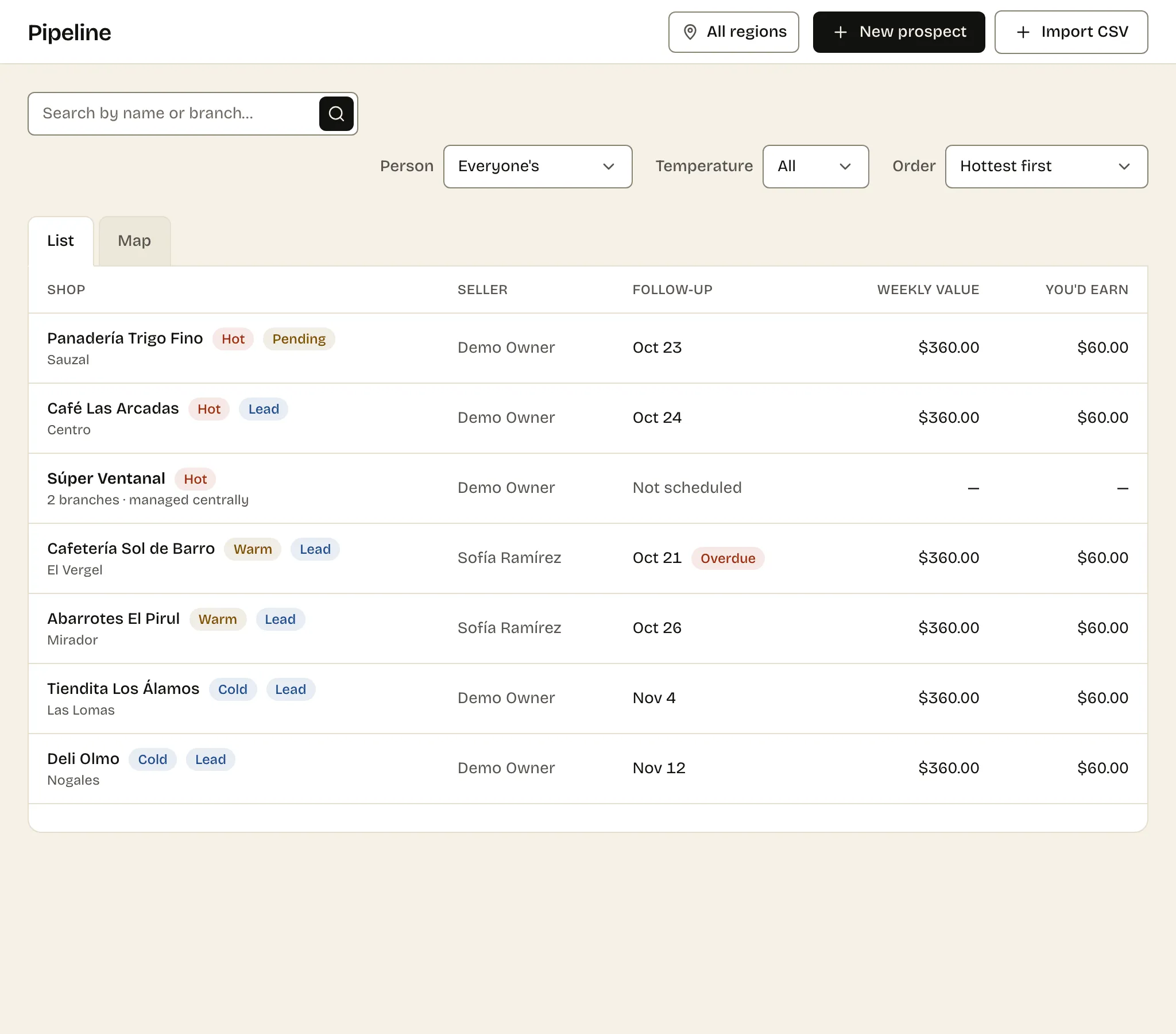
Generic sales software is built for a salesperson closing contracts. This one is built for somebody who walks into a café with a box of samples. Every prospect is a shop, on a map, with:
- How warm it is — hot, warm or cold — so the list sorts itself.
- A follow-up date, which turns up on your dashboard on the day.
- Notes and contacts: who the owner is, who actually orders, what they said.
- An owner on your team, so two Sellers never pitch the same counter.
Worth something before it says yes
Add the products you think a prospect would take and a guess at how many it would sell a week. The pipeline turns that into a weekly value at the price you expect to charge, and for a Seller, into what they would keep. A list sorted by what each shop might be worth is a list that tells you where to drive tomorrow.
Chains, branches and head offices
A supermarket chain is not one shop and not fifteen unrelated ones. It holds its branches, and a chain marked as centrally managed has one buyer deciding for all of them. That is who you follow up with.
From prospect to stockist without re-typing
When a prospect says yes it becomes a stockist on your round, carrying its notes, its contact, its owner and its products with it. The pipeline is not a separate system to keep in sync — it is the same shops at an earlier stage.
Common questions
- What does it track for each prospect?
- How warm it is (hot, warm or cold), the next follow-up date, notes, the people you talk to there, who on your team owns it, and the products you expect it to take with a guess at weekly sales.
- Can I import a list of shops?
- Yes, from a CSV file. Shops already on your books are recognised rather than added twice.
- What about chains with several branches?
- A chain holds its branches, and you can mark one as centrally managed — one buyer decides for every branch — so you chase the head office instead of fifteen shop managers.
- Does it fill in the shop's details?
- Pick the shop from Google and its type, phone number and opening hours come with it. You are not copying them from a search result on a small screen.
- Can a Seller see what a prospect would earn them?
- Yes. From the weekly guesses and the price you expect the shop to pay, the pipeline shows what the shop would be billed a week and what the Seller would keep at their partner price.