Simple DSD software for producers' own rounds
Direct store delivery without the fleet software: routes with a cadence and stops in your order, then a run that follows them and records every visit.
What you do today
The round is a list on paper in the order you happen to remember it, and at the end of the day you count the cash in the van and try to work out which shop it came from.
One concrete detail
A run keeps the cash taken at each stop as you go, so at the end of the day the cash in hand is a figure on the screen, not a guess. Ending a run with stops unvisited asks you first and says how many.
DSD — direct store delivery — usually means software for drinks distributors with forty vans. The idea underneath is simpler than the software: you take the product to the shop yourself, count the shelf, top it up and get paid. If that is your week, this is the part of Artisanly that plans it.
A route is a plan
A route has:
- A cadence — weekly, fortnightly or monthly.
- A responsible person, who answers for it. Anyone on staff can still drive it.
- A start date, before which nothing on it is due.
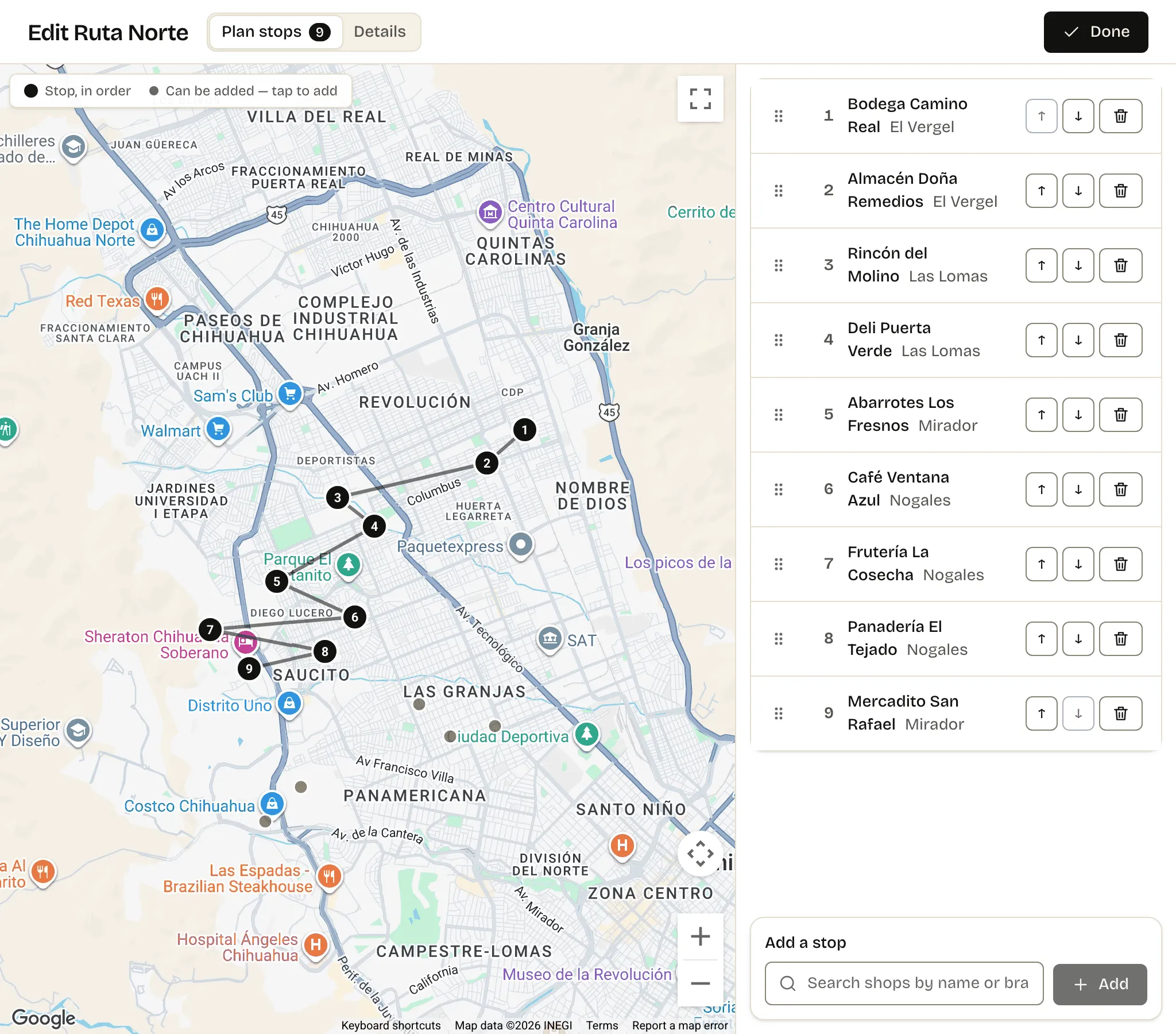
- Stops, in order. You drag them into the order you drive, and see them on a map.
Every shop on the route is due from its own last visit, so a shop you missed last time stays due instead of waiting another full cycle.
A run is the day
When you set off, start a run. The stops come up in your order with the map beside them. At each one you record the visit — the count, what you left, what was paid — and the next stop is waiting when you get back in the van. If a shop needs nothing, say so and say why.
As you go, the run adds up the cash you have taken and keeps a note for the day and any note left at a visit. At the end you end the run, and if a stop was never visited it tells you before it closes.
What it does not do
It does not reorder your stops for you, and it does not track where the van is. It is a plan you make and a record of what happened, which is what a small producer actually needs at the end of the week: which shops were seen, what they paid, and what is still owed.
Common questions
- Does it work out the fastest order for my stops?
- No. The stops go in the order you put them, and you change it by dragging. You know which shop opens late, where you can park and who wants you before the lunch rush; a route optimiser does not.
- How often can a route run?
- Weekly, fortnightly or monthly. Each shop on the route then comes due that long after its own last visit.
- Can somebody else drive my route?
- Yes. A route has a responsible person, but anyone on your staff can start a run on it, and each run keeps who drove it.
- What if a shop on the route needs nothing today?
- Record the stop as no delivery required, with the reason. The visit is on the record and the run moves on.
- Can a shop be on more than one route?
- Yes. It comes due on whichever route reaches it first, and the delivery form fills it to last until that next visit.