Know exactly what every shop owes you
Balances per shop, worked out from what sold rather than what you delivered, with transfers held apart until somebody confirms they arrived.
What you do today
You add it up from delivery notes at the end of the month, and the shop remembers a different number to the one you remember.
One concrete detail
A transfer sits in awaiting-bank until a person confirms it landed, so money that was promised is never counted as money that arrived.
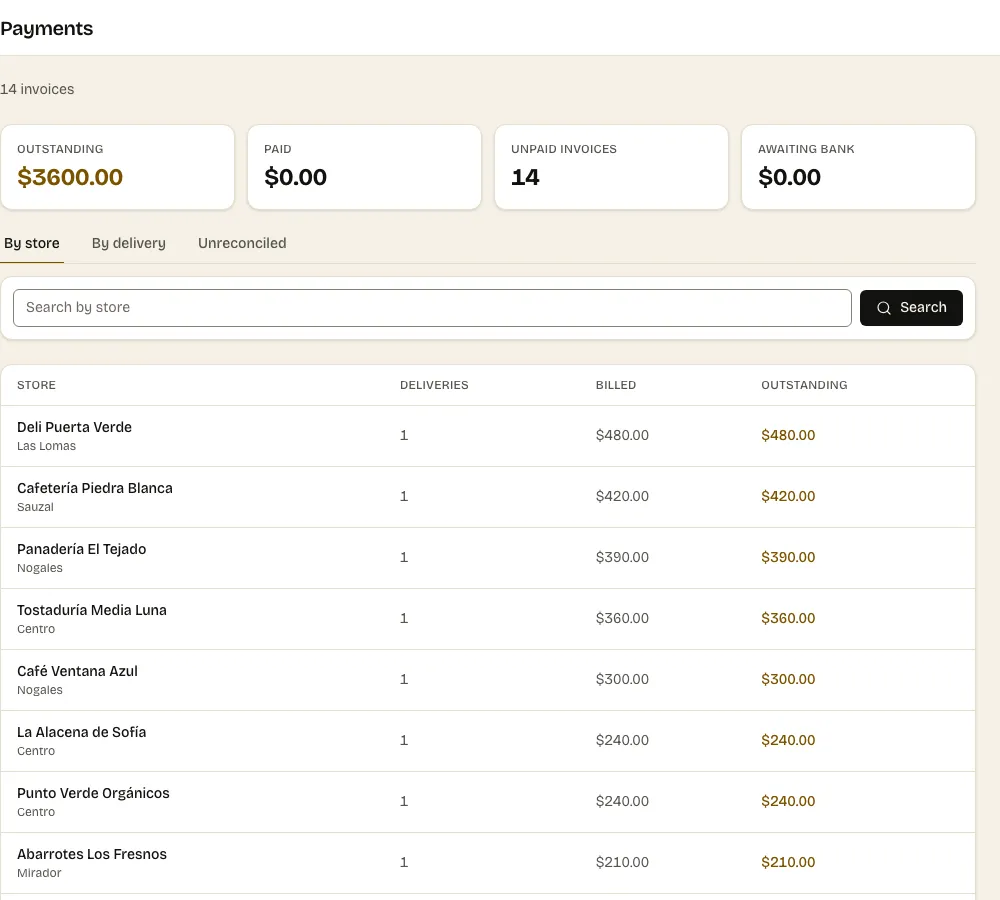
This is the number the whole product exists to get right: what does this shop owe me, right now.
Worked out from what sold
On consignment the balance is not what you delivered. It is what sold, which is last visit’s count minus what is still on the shelf. Delivered and owed are two numbers that do not touch, and the delivery screen shows both so you can watch one move without the other.
Transfers are not payments until they land
A shop that says it transferred the money has not paid you yet. The money is somewhere between their bank and yours, and treating a promise as an arrival is how a balance drifts.
So a transfer is recorded as awaiting bank and stays there until a person confirms it arrived. Cash settles immediately, because cash in your hand is cash in your hand.
Common questions
- Can one payment settle several visits?
- Yes. A shop that pays you for a month at a time settles every visit in that period with one payment, and the balance goes down by the amount actually paid.
- What about a shop that pays part of what it owes?
- The part paid comes off the balance and the rest stays owed. Nothing is rounded away and nothing is written off quietly.