Never bill a consignment shop like a direct one
Each shop is consignment or direct, and the bill follows the right basis without you having to remember which is which.
What you do today
You keep two kinds of shop in your head, and you decide which basis applies while standing at the counter with a crate in your arms.
One concrete detail
A shop's basis is set once on the shop itself, not per delivery, so a driver who has never been to that shop before bills it correctly on his first visit.
Most producers end up running both. A shop that already trusts you buys outright; a shop that does not yet know whether your product moves takes it on consignment, because that way the risk of it sitting there is yours rather than theirs.
The two bases are different sums
Direct is the simple one: the shop buys what you hand over, and the bill is what you delivered.
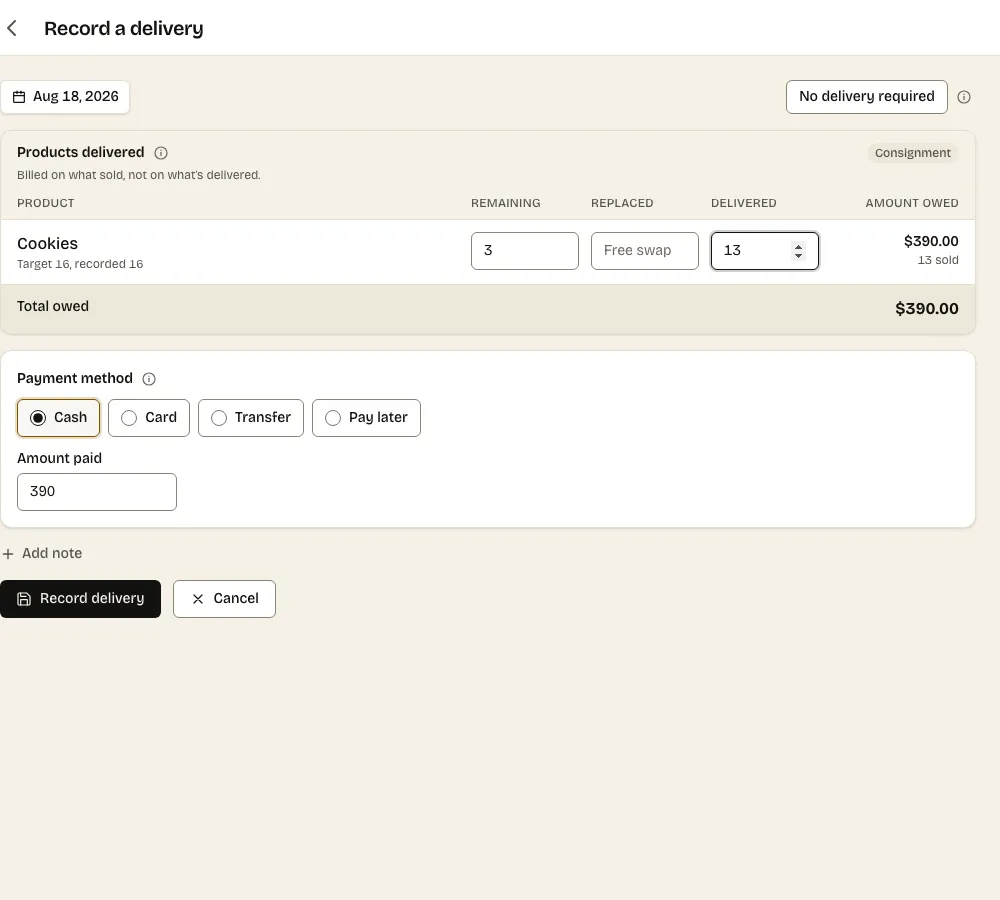
Consignment is not. The shop pays for what sold since your last visit, which is what you left last time minus what is still on the shelf now. What you drop off today does not enter that sum at all — it will be charged next visit, once it is known how much of it sold.
Getting those two the wrong way round is the single most expensive mistake in this trade, and it is easy to make when you are standing up and in a hurry.
Set once, on the shop
The basis lives on the shop, not on the delivery. You set it when you add the shop and it stays until you change it deliberately.
That matters most when somebody else drives your round. A driver who has never met a shop does not need to know your arrangement with the owner: he counts what is on the shelf, and the right sum happens.
Common questions
- Can one shop change from consignment to direct?
- Yes. Change it on the shop and every delivery from then on follows the new basis. Past deliveries keep the basis they were recorded under, because changing them would rewrite money that has already been settled.
- Does a driver need to know which is which?
- No. The delivery screen already knows, and it says which basis it is applying at the top of the form.